

YOUR CART IS EMPTY
Go to cart
Suction cups grip, lift, position, and set non-porous glass safely, provided you match the cup to the job. The right choice depends on glass shape, cup profile, the load you need to hold, how many technicians control the glass, and whether manual pumping or a battery-powered vacuum fits your workflow. This guide covers handling and setting glass after the cut-out work is done, so it treats suction cups as handling tools rather than cut-out equipment.
Handling a windshield and cutting it free are two separate stages, and each needs the right tool. Suction cups grip and lift glass and other non-porous materials for moving, installing, and safe handling. They are not the tool that releases a glued windshield from the body, and they do not replace proper cut-out equipment or safe glass-handling procedures.
Use this order every time you lift:
Confirm the glass is fully and safely released with the appropriate cut-out process before you apply any lifting force.
Inspect the cup condition and the glass contact area before attachment.
Position the cups for balanced control and adequate hand clearance.
Create the seal and verify it before lifting.
Lift, transfer, and set the glass with the technician count that suits the size, shape, and handling conditions.
Release the cups only after the glass is stable and supported.
There is no single winner for every job. Work through these criteria before you buy.
Curvature and cup profile. Curved-profile cups conform to curved glass and larger panels. Flat-profile cups suit auto glass and flatter non-porous surfaces. Match the profile to the glass shape first, because a flat cup on a strongly curved windshield will not seat evenly.
Diameter and rated capacity. Bigger is not automatically better. Compare the cup diameter against the glass area you actually have, then check the rated capacity against the panel weight. A large cup that cannot sit properly on the available contact area is the wrong fit regardless of its rating.
Seal quality and grip surface. A strong vacuum seal is the whole game. Surface cleanliness and base rubber both affect it.
Handle clearance and technician control. The handle should leave room for a secure, comfortable grip and allow controlled placement on curved automotive glass.
Manual pumping versus automatic vacuum. Workflow cadence and technician preference drive this. The section below compares the mechanisms.
Tool condition and durability. Check the cup rubber, handle, pump, and release control before you rely on them for a lift.
The full ladder of vacuum cups, by profile and rated capacity. Prices are GT Tools list prices checked August 19, 2026; confirm current pricing on each product page.
|
Cup |
Diameter |
Profile |
Rated capacity |
Best fit |
Price |
|---|---|---|---|---|---|
|
6" |
Curved |
75 lbs |
Windshield positioning and general handling |
$77.00 |
|
|
7" |
Flat |
90 lbs |
Flatter auto glass |
$104.00 |
|
|
8" |
Flat |
150 lbs |
Auto glass, flat glass, stone, tile |
$63.00 |
|
|
8" |
Flat |
175 lbs |
Heavier flat panels |
$102.90 |
|
|
8" |
Curved |
200 lbs |
Curved glass at higher load |
$112.40 |
|
|
9" |
Curved |
250 lbs |
Large curved panels |
$117.60 |
|
|
10" |
Curved |
300 lbs |
Heavy-duty curved glass, stone, large panels |
$131.30 |
|
|
Double |
Curved |
100 lbs |
Two-point grip on one handle |
$59.90 |
|
|
6" |
Ergonomic, dual-angle |
See product page |
Technicians who change grip position through a lift |
$72.50 single, $132.00 two-pack |
|
|
6" base |
Soft, high-tack base |
See product page |
Grip on imperfect surfaces, reduced pumping |
$38.90 |
|
|
Attachment |
n/a |
Set by the paired cup |
Automating pump-down on existing cups |
$65.00 |
GT Tools also stocks BYK-branded curved cups at the same capacities and prices: the BYK 6 inch curved, 75 lbs at $77.00 and the BYK 8 inch curved, 200 lbs at $112.40. Browse everything in the Glass Suction Cups collection.
Manual-pump cups suit technicians who want direct control over seal creation and verification before lifting. You feel the pump-down, and you get a clear check before committing to a lift. Every vacuum cup in the table above is a manual-pump design.
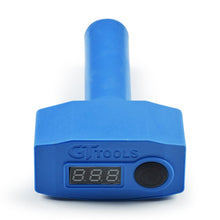
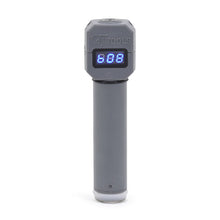
Automatic battery-powered vacuum suits repetitive work where cutting manual pumping saves real time across a shift. The SuperPump™ is a universal attachment rather than a cup: it fits any large brass or plastic pump-style suction cup, and GT Tools states it has been tested across more than 30 brands and models.
The specifications that matter for a working day:
A standard 6-inch cup reaches full vacuum in about 6 seconds.
Roughly 2,000 cycles on a single 5-hour charge.
Charges over a standard USB-C cable, no proprietary charger.
Automatic vacuum regulation: it shuts off once full vacuum is reached and holds it, then reactivates instantly if vacuum dips because of a leak or cracked glass.
Covered by a 3-year warranty.
That reactivation behavior is the safety-relevant feature. A manual cup that loses vacuum gives you a gauge to watch; the SuperPump reacts on its own. It does not remove the need for a pre-lift inspection and seal check. A Mini SuperPump™ is also available at $65.00.
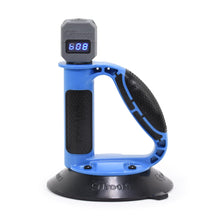
The SuperGrip™ is worth understanding in detail, because it is the one cup in the range designed around the handling problem rather than the load number. GT Tools calls it the industry's first overmolded suction cup with a truly ergonomic design, developed after analyzing hundreds of hours of technician glass-handling video.
Dual-angle grips. It takes the industry-standard vertical stick grip and adds an angled grip option, so you can change hand position as the glass and the angle change through a lift.
Diamond overmolded TPU grips. Strategically placed TPU inserts in both the vertical and angled handle sections, borrowed from power tool design, to hold the hand-to-cup connection regardless of conditions.
Custom sticky base rubber. Designed to increase holding power and reduce pump-down time, with a glossy molded finish that further increases stickiness and prevents movement once pumped down.
Brass pump and reinforced structure. Truss load-distribution ribbing and FEA stress analysis, backed by GT Tools' 3-year Ironclad warranty.
Assess cup diameter, handle clearance, and curvature together rather than one at a time. On a strongly curved windshield, a smaller curved cup that seats fully beats a larger cup that only makes partial contact.
The single-person versus two-person decision depends on the job, not a fixed rule. A one-person setup fits only when the cup system, the glass size and shape, the access, and the control requirements all support safe solo handling.
Move to two technicians when windshield size, curvature, awkward positioning, restricted access, or the need for balanced control makes one technician less able to keep the glass stable. Rated capacity alone does not decide crew size: a 300-pound rating on a single point of contact says nothing about whether one person can balance an awkward panel through a doorway.
For larger or more curved glass, consider a two-cup setup or the Double Glass Suction Cup, which puts two contact points on one handle for more balanced control on a single grip.
Run this checklist before every lift.
Inspect the cup rubber, handle, pump mechanism, and release control for visible wear, contamination, or damage.
Clean the windshield contact area and the cup surface thoroughly, since clean surfaces are what let the seal form.
Position the cup on a suitable, accessible part of the glass with enough clearance for the handle and the lifting motion you plan.
Create the vacuum seal, then run a controlled pre-lift check before you commit to a full lift.
Recheck the seal if you move the glass, if conditions change, or if the cup shifts at all.
Remove, clean, dry, and store the cups in a way that protects the sealing surface between jobs.
Suction Cup Lube at $8.00 is worth keeping on the bench for maintaining the sealing surface.
Standard windshield positioning. The 6-inch curved cup at 75 lbs, or the SuperGrip if you want grip flexibility.
Standard auto glass and flatter surfaces. The 8-inch flat cup at 150 lbs, the best value in the range at $63.00.
Heavier curved glass and larger panels. Step up through the 8-inch curved at 200 lbs, the 9-inch at 250 lbs, or the 10-inch at 300 lbs.
Quick, repetitive work. Add the SuperPump to cups you already own rather than replacing them.
Long shifts and technician comfort. The SuperGrip, single or two-pack.
Match the rating to the panel weight with margin, then confirm the cup can actually seat on the available contact area. GT Tools' range runs from 75 lbs on the 6-inch curved cup up to 300 lbs on the 10-inch curved cup. Rated capacity assumes a full, clean seal, so treat it as a ceiling under ideal conditions rather than a working target.
Curved profiles for curved glass and larger panels; flat profiles for auto glass and flatter non-porous surfaces. Profile is the first filter, ahead of diameter and capacity, because a mismatched profile cannot form a full seal no matter how large the cup.
It depends on repetition. The SuperPump reaches full vacuum on a standard 6-inch cup in about six seconds and runs roughly 2,000 cycles per 5-hour charge, so the payoff scales with how many lifts you make per day. It also holds vacuum automatically and reactivates if the seal dips. Since it fits any large brass or plastic pump-style cup, you can add it to the cups you already own.
Base the count on the glass, the access, the balance you need, and the number of technicians keeping control. There is no universal number. Larger or more curved glass generally needs more contact points or a second technician.
The SuperGrip and the SuperPump both carry GT Tools' Ironclad 3 Year Warranty, with the stated terms covering defects in workmanship and materials for three years from original purchase. Confirm the terms on the specific cup you are buying, since coverage varies across the range.
No. Suction cups are handling tools for gripping, lifting, positioning, and setting glass. Release the glass with the correct cut-out process first, then lift and transfer it.