



YOUR CART IS EMPTY
Go to cart
Sanding and polishing a headlight is the visible part of the job. Whether the customer is still happy next summer comes down to the coat that goes on afterward. GT Tools sells two products for that step. The products vary in price and the product pages outline why, which comes down to how long the protection lasts, months vs years. This guide covers what each one claims, what each costs by the ounce, and which product is right for which job.
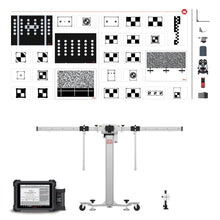
A calibration frame arrives with a laser and a set of lane departure targets. It does not arrive with the pattern for the Subaru in bay two, and the Honda target that fits one frame may not fit another. Targets are bought per make, sometimes per system within a make, and the same target is sold in two versions at two prices depending on which frame it mounts to. This guide covers what GT Tools sells, target by target, what each one costs, and how to decide which ones belong in your shop.
Most of what’s needed for a windshield job is tooling that you buy once. Molding, tape, setting blocks and daubers are the items you buy again every month, and molding is the only one you have to size correctly.
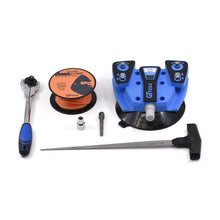
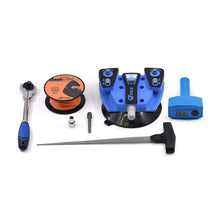
GT Tools sells four windshield removal kits, from $1,103 to $4,676. The gap between the cheapest and the most expensive is not a matter of better versions of the same tools. Every kit contains the same hand tools. What changes as you move up is how many ways you can cut glass out, and whether one person can set the new glass alone.
With the right gun the bead goes on in one pass. Auto glass urethane is thick, it stiffens as it gets colder, and the tool has to push it out at a steady rate while your hand moves at a steady speed. This guide covers what GT Tools sells, what each one costs, and the two questions to answer before you buy: how cold it gets where you work, and what size pack your urethane comes in.
A repair that looks right when the resin goes in and wrong an hour later failed at the cure. Either the resin did not get enough of the right light, or the pit was open while it hardened, or it was the wrong resin for the temperature before the lamp ever came on. This guide covers what GT Tools sells to cure with, what each piece costs, and the five things to check when a cure comes out soft, cloudy or incomplete.
Scratch removal fails for one reason more than any other: somebody skipped a step in the abrasive sequence. GT Tools Tools sells two five-step disc ladders for glass, its own SpeedGrit and 3M Trizact, and both are built the same way. Every step after the first exists to remove the scratches the step before it made. SpeedGrit says so disc by disc: Step 3 Green is "used to blend out discs 1 and 2," and Step 4 Yellow blends out 1, 2 and 3. The Trizact pages give the same instruction for the whole range, that you work down through every grade below the one you started at before any compound touches the glass. Skip a grade and those scratches stay in the glass, under the polish.
GT Tools builds three windshield repair systems and they are not three tiers of the same thing. The SuperStar SpeedLock is $772.00 and hand-operated, with supplies for over 150 repairs. The VANISH is $882.00, also hand-operated, with an integrated curing bridge and the full five-resin set. The Wizard is $3,255.00 and automated, running the injection cycle itself. The choice comes down to two things: what comes in the case, and whether the technician or the machine controls the fill. This guide covers all three systems and which is the best fit for your shop.
Star break, use LV. Bullseye or combination break, use HV in hot weather and MV otherwise. Long crack, use CR. Cap the pit with PF or PFAF. Those four choices cover most of this type of work. Two things to make sure to consider: temperature, which overrides the break type entirely, and the half-inch rule on HV, which GT Tools states as a prohibition rather than a preference. This guide covers all six DiamondClear resins, what each is formulated for, the temperature rules, and the tint and bottle-size choices available.
A shop that does both alignments and calibrations can buy one machine for both. The Autel IA900WA is $17,964.00 and performs four-wheel alignments and static ADAS calibrations from one platform. If you only need alignment, the IWA500 is $15,000.00. If you only need calibration, the IA700 is $14,400.00. Bay space, floor condition and whether you already own an alignment rack usually decide more than the model number does. This guide covers the three ways to buy, what each configuration includes, and what the bay needs in place before any of it works.
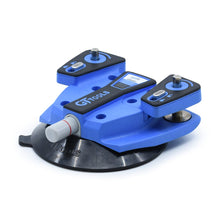
A suction cup that will not hold is usually not worn out. Three components fail, all of them replaceable, and GT Tools sells the parts for all three in one kit for $5.30. The pump seal wears and the cup stops pulling vacuum. The rubber flapper inside the plunger bore cracks, or its retaining clip breaks, and the cup pumps but will not hold. The cup rubber itself dries out and stops sealing against glass. Replacing a $77.00 cup because of a worn $5.30 seal is a mistake plenty of shops make. This guide covers how to tell the three apart and what to do about each.
GT Tools makes three synthetic cutting lines, and the company is very clear about the differences between them. The Titan Cord product page says it plainly: "This is not the cord you use to save glass. Use our ZipLine for that." That single sentence settles most of the choice. ZipLine is for cut-outs where the glass is coming out intact and the hardware around it is expensive. Gorilla Cord is for old, hard aftermarket urethane. Titan Cord is for glass you have already written off, where the only goal is getting it out. This guide covers what separates the three, what they cost per spool and per five-pack, and why a synthetic line is better than wire on an aluminum body.
