

YOUR CART IS EMPTY
Go to cart
High-volume auto-glass replacement shops need dependable manual tools for urethane trimming, pinchweld preparation, and lock-strip or gasket work. These are two different job stages, not one. Pinchweld and gasket tools are the hand tools GT Tools makes for urethane removal and gasket installation on auto glass, used to prepare the bonding surface before the new glass goes in and to install or remove window gaskets. Choosing durable lock strip tools for high volume shops starts with knowing which stage each tool serves.
A glass replacement follows a repeatable sequence. Each stage calls for a specific tool purpose, and matching the tool to the stage keeps work clean and consistent.
Remove the old glass and related components. Take out the old glass, molding, gasket material, or related parts using the correct removal tool for the application.
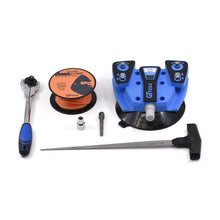
Trim excess urethane and prepare the pinchweld. The RazorScraper™ System removes urethane and prepares pinchwelds for the new glass installation.
Protect adjacent surfaces. Choose the correct blade shape and working-end access to guard nearby paint, trim, encapsulants, and glass while you trim.
Install or service locking strips and gaskets. Do this only when the vehicle's glass system uses them. A rope insertion tool positions a length of rope under the lip of a windshield rubber gasket and secures it in the gasket groove; a locking-strip tool threads the strip into the gasket as you work it around the glass.
Inspect, replace, and stage. Check tools, swap worn consumables, and stage backups before the next job.
A bent-shaft locking strip tool belongs to a different category from a urethane scraper. Do not treat it as a substitute for a pinchweld-prep blade. The two tools do different jobs at different stages.
For application context, GT Tools describes the locking-strip stage directly: insert the tip into the rubber gasket, thread the locking strip into the eyelet of the tool, then work the tool around the glass while feeding the locking strip into the eyelet [1]. That is the gasket-installation stage, which is separate from urethane trimming.
Browse the full range across tool categories in the Pinch Weld and Gasket Tools collection.
"Heavy-duty" is a buying framework, not a durability promise. For a shop that runs the same tasks many times a day, the useful question is whether a tool suits repeated handling, reaches the work area with controlled hand positioning, uses replaceable wear components, and stays ready between jobs. Use these criteria when you evaluate a tool.
Manual control. The technician should guide the working end precisely around seams, corners, bottom-dash areas, and pillars.
Working-end access. Match blade width, blade shape, and shaft geometry to the seam or gasket profile being serviced.
Surface protection. Identify when anti-scratch or guarded designs are appropriate near sensitive finishes and glass.
Consumable serviceability. Favor systems that allow blade replacement instead of requiring replacement of the whole tool once the edge wears.
Handle availability. For teams with multiple bays or technicians, check whether extra handles and blade packs can be staged for uninterrupted work.
Lock-strip compatibility. Confirm that the working-end design fits the locking-strip or gasket profile you service most.
GT Tools' RazorScraper™ Plus System packages 1/2-inch, 5/8-inch, and 3/4-inch straight blades with three 3/4-inch anti-scratch winged blades, letting a technician match blade width and edge design to the seam and surface [2]. GT Tools describes its Pinch Weld and Gasket Tools collection as hand tools for urethane removal and gasket installation [4].
Battery compatibility is not a selection issue for the featured manual scraper and locking-strip tools. These are hand tools, so there is no charge cycle to manage and no battery to swap between jobs. Direct your attention instead to technician control, blade availability, and application fit.
The table below is the central reference for the featured tools. It records what the published GT Tools product information documents, and marks the few points that are genuinely not published so you can confirm them before purchase.
|
Exact model name |
Intended task |
Compatible strip/profile or application |
Working-end design/material |
Handle or ergonomic details |
Replacement-part availability |
Warranty/support |
|---|---|---|---|---|---|---|
|
GT Tools® RazorScraper™ Plus System |
Precision pinchweld preparation and excess-urethane removal in varied situations |
Includes 1/2-inch, 5/8-inch, and 3/4-inch straight blades plus 3/4-inch anti-scratch winged blades; select the blade size for the seam |
Interchangeable surgical-steel straight blades and anti-scratch winged blades |
Package includes two handle styles and two additional RazorScraper™ handles |
Includes a RazorScraper™ Basic Kit, two extra handles, 10-packs of each straight-blade size, and three anti-scratch winged blades |
Covered by GT Tools' Kit Products Warranty (the site's "Ironclad Kit Product Warranty"). The standard tool warranty (defects in workmanship or materials, 1 year from purchase) applies to the hand tools; disposable and consumable items, including the interchangeable blades, are excluded from that coverage |
|
Single Edge Razor Scraper |
Trimming urethane during pinchweld prep, including bottom-dash prep and many A-pillar prep tasks |
Positioned for urethane trimming; no locking-strip or gasket-profile compatibility claimed |
Removable, replaceable single-edge razor blade; includes a plastic shield for the end of the scraper |
Controlled manual scraping role; no other handle details published |
Single-edge blade can be removed and replaced |
Product page carries a Lifetime Warranty badge alongside the standard 1-year defect warranty; consumables are excluded from the standard warranty |
|
Locking Strip Tool Bent Shaft |
Locking-strip work, not urethane scraping |
Four different eyelet types that GT Tools states will fit the majority of rubber locking strips; select the eyelet that most closely fits the strip, and confirm fit with GT Tools if your shop services an unusual profile mix |
Tip swivels 90 degrees in either direction and has four different eyelet types sized to fit the majority of rubber locking strips |
Bent shaft lets the technician hold a hand away from the molding while using the tool |
Replacement components not specified; confirm spare-part availability with GT Tools |
Product page carries a Lifetime Warranty badge alongside the standard 1-year defect warranty; consumables are excluded from the standard warranty |
The GT Tools RazorScraper™ Plus System and the broader Pinchweld Prep Tools collection are the shopping paths for the pinchweld side of this work.
Different vehicle seams and sensitive surfaces call for different blade widths and, in some cases, anti-scratch options. An interchangeable-blade system lets a technician change the working end without changing tools, which matters when the shop's daily mix moves across several vehicle types.
For the RazorScraper™ Plus System package contents, see the specification table above. Having three straight-blade widths on hand means the technician matches the blade width to the seam and application rather than forcing one width into every situation.
Treat replacement blades as consumables to reorder based on your own use. The product information does not state a service interval or blade lifespan, so do not assume one.
A simpler single-edge format fits focused trimming work, bottom-dash preparation, and many A-pillar preparation tasks. When the job is straightforward urethane trimming in an accessible area, a single-edge tool keeps the setup light.
The Single Edge Razor Scraper uses a single-edge razor blade that can be removed and replaced. It also includes a plastic shield for the end of the scraper, which is worth accounting for during storage and handling [3]. The product description does not claim quantified damage-prevention results, so treat the shield as a handling feature rather than a guarantee.
This is a pinchweld-prep tool, not a lock-strip installation tool.
Select a locking-strip tool only after confirming the vehicle uses a compatible locking gasket or strip system. Assigning the wrong tool category to a job wastes time and risks damage.
The Locking Strip Tool Bent Shaft has a tip that swivels 90 degrees in either direction and includes four different eyelet types sized to fit the majority of rubber locking strips. The technician selects the eyelet that most closely fits the strip being installed, inserts the tip into the rubber gasket, threads the locking strip into the eyelet, then works the tool around the glass while feeding the strip into the eyelet. Its bent shaft lets the technician hold a hand away from the molding while using the tool. No specific spare-eyelet-tip part number is published, so confirm replacement-part availability with GT Tools before you standardize on it.
Working around tight corners without damage starts with tool selection, not force. Pick the right blade size and design for the work area rather than applying excess pressure or reaching for an unsuitable tool.
GT Tools offers anti-scratch winged blade options in the RazorScraper™ Plus System. Choosing that blade over a straight edge gives you a working end suited to finished paint, encapsulants, and glass edges.
Good technique supports the tool choice. Keep hand pressure controlled and deliberate. Set a consistent approach angle before contact. Inspect the working edge for burrs or damage before it touches a finished surface. These are best practices, not quantified safety guarantees.
Do not use a lock-strip tool for urethane trimming, and do not use a scraper as a substitute for a profile-matched lock-strip tool. Each substitution raises the chance of damage and poor results.
Run through this checklist before buying.
Is the primary task urethane trimming and pinchweld prep, locking-strip installation, gasket installation, or a combination?
Which seam widths and vehicle access areas occur most often in the shop's work mix?
Does the tool use replaceable blades or other wear components that can be staged as spares?
Are anti-scratch blade options needed for the applications the shop handles?
Does the shaft, handle, or working end provide the needed manual access around pillars, bottom-dash areas, corners, and trim?
Do the available eyelet types cover the locking-strip profiles the shop services most?
Which warranty applies to each tool, and which items are excluded as consumables?
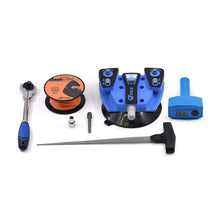
A shop that needs a broader set of specialty hand tools for cutting, pinchweld prep, clip removal, panel manipulation, and gasket work may want a base package rather than individual tools. The Base Auto Glass Hand Tool Package includes a Pinchweld Razor Scraper, 1/2-inch, 5/8-inch, and 3/4-inch pinchweld razor blade packs, and a Bent Shaft Locking Strip Tool, along with other specialty hand tools [5]. It is a contextual option for shops building a wider manual-tool setup, not a requirement for every shop.
High-volume teams should separate three kinds of on-hand items: blade consumables, extra handles, and complete backup tools. Each plays a different role in keeping a bay running.
The RazorScraper™ Plus System package includes extra handles and multiple blade packs, giving a shop documented on-hand components for its initial setup. See the RazorScraper™ Plus System and Single Edge Razor Scraper selection guidance above for their blade details. Set your own replenishment quantities based on job mix, blade condition, and the applications you handle. The product information does not specify a number of spares or a replacement frequency.
Use this inspection list between jobs:
Check the blade edge condition for wear, chips, or burrs.
Confirm secure blade retention in the handle.
Check the scraper shield condition where applicable.
Inspect the shaft, swivel action, and eyelets on locking-strip tools.
Store tools clean and dry.
Replace a blade once the edge chips, dulls, or stops cutting cleanly, and store tools clean and dry between shifts.
No. Pinchweld-prep scrapers trim urethane and prepare the bonding area. Locking-strip tools are selected for locking-strip or gasket-related work at a separate stage. The RazorScraper™ System is identified for urethane removal and pinchweld preparation, not for gasket installation.
Suitability comes from correct application fit, controlled access to the work area, replaceable consumables where offered, and a practical spares plan the shop maintains itself. A tool that matches the seam profile, reaches the work cleanly, and accepts replaceable blades fits repeated use, and you set your own spares plan around it. The product information does not guarantee a durability duration, a job count, or faster cycle times, so evaluate against these operational criteria instead.
Match the blade width to the seam, use anti-scratch options where the surface calls for them, keep manual pressure controlled, and avoid substituting one tool category for another. Consider a guarded or narrower working end when you work near finished trim at a tight corner.
Blades are the explicitly replaceable wear components documented for both the RazorScraper™ Plus System and the Single Edge Razor Scraper. Replacement components for the Bent Shaft Locking Strip Tool are not specified in the provided listing, so confirm availability before you standardize on it across bays.
The featured GT tools are manual hand tools. Evaluate technician control, working-end access, and serviceable blade options rather than one-person installation capability, speed gains, or quantified wear resistance. No technician-count, time-to-completion, or quantified wear-resistance data is provided for the featured products in the supplied product information, including the Locking Strip Tool Bent Shaft listing.
The RazorScraper™ Plus System is covered under GT Tools' Kit Products Warranty (the "Ironclad Kit Product Warranty"), with the standard 1-year defect warranty covering the hand tools and disposable blades excluded from that coverage. The Single Edge Razor Scraper and the Locking Strip Tool Bent Shaft each carry GT Tools' Lifetime Warranty badge on their product pages. Confirm replacement-part availability with GT Tools before a fleet or multi-bay purchase.
Before you order, confirm four things: the application fit for the tasks your shop runs most, the blade configuration that matches your seam widths and sensitive surfaces, the spare-component quantities your job mix needs, and the replacement-part details that the product listings do not document.