

YOUR CART IS EMPTY
Go to cart
Motorized vs. Wire Windshield Cut-Out Tools for Auto Shops
Your removal method decides how many windshields your shop can turn in a day, how often you damage a pinch weld, and how tired your technicians are by closing time. Three tool categories dominate professional bays: motorized reciprocating cut-out tools, wire and fiber cord systems, and induction heaters. This guide breaks down how each works, when to reach for it, and which supporting tools finish the job cleanly, so a high-volume shop can invest in the right setup.
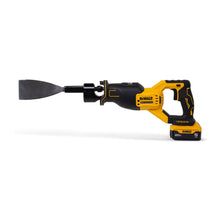
A motorized cut-out tool drives a stiff blade in a fast back-and-forth stroke that slices through the urethane bead holding the glass to the pinch weld. The technician guides the tool along the perimeter while the motor does the cutting work. Modern cordless tools run on standard power-tool battery platforms, so a shop can keep spare packs charged and never wait on a cable.
The main draw is speed. For daily windshield replacements at volume, nothing removes glass faster than a powered reciprocating saw built for auto glass. Newer designs also cut technician fatigue, which matters when a crew is doing a dozen or more removals a shift. A corded electric option like the Dunk's cut-out tool exists for stationary bays, as noted in this 2025 windshield tool review, but most shops favor cordless for mobility around the vehicle [1].
The GT Tools® Beast™ Auto Glass Cut Out Tool is built for the hardest jobs and is the brand's most durable cordless reciprocating saw. A redesigned trigger assembly, anti-corrosion blade clamp, and metal-reinforced battery rails give it longer component life under rough daily use. Its Smooth Drive System (SDS™) dampens the stroke impact while keeping the blade in contact with the urethane bead, which makes cutting the A-pillars, roof line, and bottom bead faster and less physical for the technician. It runs on an 18V XC High Capacity REDLITHIUM battery for extended run-time between charges. See the Beast™ product page for full specs.
For shops that want maximum stroke speed with fine control, the GT.50 Reaper™ 20V Brushless Auto Glass Cut Out Tool runs a brushless motor delivering up to 3,200 strokes per minute. That translates to aggressive urethane cutting without giving up precision, so removals go faster and the blade stays accurate along tight bead lines. Details are on the GT.50 Reaper™ page.
GT Tools also makes the lightweight Diablo™, which GT Tools' own product page describes as having "the smallest footprint among GT reciprocating tools," reducing operator fatigue, and which runs on the Milwaukee 18V platform. See the Diablo™ product page.
Pros: Fastest removal method, best throughput for high-volume shops, reduces physical strain over a full shift, cordless models keep the technician mobile around the vehicle.
Cons: Higher upfront cost than a manual knife, and a blade run into the pinch weld can scratch paint if the tool is not controlled carefully.
A wire or fiber cord system works like a saw. A high-tensile steel wire or synthetic cord is threaded between the glass and the pinch weld, then pulled back and forth to slice through the urethane. As Bob Beranek explains at AGRR Magazine, wire-out tools are both the oldest cut-out method (used when the first glued-in windshields appeared in the 1940s) and among the newest, since modern versions have been reinvented for today's vehicles and have grown more sophisticated and popular [3]. Beranek considers a wire-out tool the best way to remove glass without undue breakage or damage to the painted metal, though it does take longer than other tools.
The process starts by feeding the wire around the perimeter with a leader tool, then applying tension and working it through the adhesive. As a windshield tool guide on Alibaba notes, the wire is often 60 to 70 feet long, carries low risk of scratching paint when used correctly, and is reusable [4]. The trade-off is patience: the wire can break mid-cut on older, hardened adhesives.
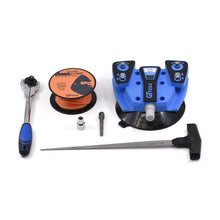
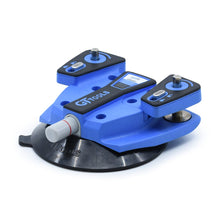
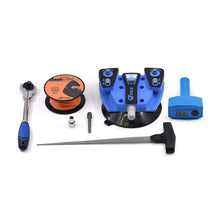
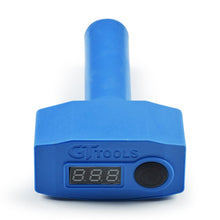
The FinalCut™ Auto Glass Cut Out Tool is GT Tools' best-selling cord and wire system and leads the professional-grade line. Its small profile fits into tight spaces for tough quarter-glass cuts, yet it was over-engineered to take the daily abuse of windshield removals. The cord and wire ride on hardened 304 stainless steel spool and pulley components, engineered to accept both wire and cord cutting materials, so the wearing surfaces hold up. The full tool is on the FinalCut™ product page.
Technicians who already stock wire, cord, and the other ancillary items can buy the FinalCut™ Winding Assembly Only, which gives you the winding unit without the extras. GT Tools' Dual-Drive design lets technicians run the FinalCut™ (and the 8-inch-platform ShortCut) with either GT Tools' own swivel drive ratchet or a low-revolution, high-torque drill, so shops aren't locked into one driver. Browse the full lineup on the Cord & Wire Cutout Tool Systems collection.
Synthetic fiber lines are a related option. GT's ZipLine removal line is designed to replace steel wire, cutting down on wire breakage, paint scratching, and safety hazards while staying durable and strong, per the Auto Body Toolmart catalog [2].
Pros: Minimal risk of scratching paint or bending the pinch weld, removes the glass whole for potential reuse, well suited to vehicles with tight tolerances or sensitive electronics near the glass.
Cons: Slower than a motorized tool and needs more setup time. Steel wire can break on old, hardened urethane, which is where synthetic cord helps.
Induction heating is the third category, and it uses neither blades nor wires. The tool heats the urethane through the metal of the pinch weld until the bond releases, which means no cutting and no debris. Induction Innovations, maker of The Inductor, positions this as a distinct approach with no blades, no wires, and no flames [5].
The company's Glass Blaster attachment (used with the Pro-Max or Max heater) claims windshield removal in 12 minutes or less and side glass in 3 minutes or less. The process runs in five steps: locate the urethane bead, mark and position the L-wedge, apply water or Cold Shield Gel, insert the L-wedge, then activate the Glass Blaster in overlapping passes. Because nothing touches the paint or encapsulant, the method protects the frame and can leave the glass intact for reuse.
Pros: No physical contact with paint, no blades or wires to break, no cutting debris, and glass can often be reused.
Cons: High initial cost, and it requires a different skill set than blade or wire tools, so expect a learning curve for the crew.
|
Tool Type |
Speed / Throughput |
Best For |
Risk of Damage |
|
Motorized / reciprocating (Beast™, GT.50 Reaper™) |
Highest |
High-volume daily windshield replacements |
Moderate: blade can scratch paint if uncontrolled |
|
Wire / fiber cord (FinalCut™, ZipLine) |
Low to medium |
High-end vehicles, tight tolerances, quarter glass, damage prevention, whole-glass removal |
Low when used correctly |
|
Induction heating |
Medium (12 min per windshield claimed) |
Paint-sensitive jobs, reusable glass, no-debris removal |
Very low: no contact with paint |
The practical read for most shops: run motorized tools for everyday throughput, keep a wire or cord system for high-end vehicles and tight quarter glass, and add induction if you frequently handle paint-sensitive or reusable-glass work.
Blades are consumables, and the right one depends on the tool and the job. Reciprocating cut-out tools take dedicated power cut-out blades, sold in different profiles and lengths for windshields, back glass, and tight corners. A cold knife is the manual option: a fixed blade the technician pushes and pulls through the urethane by hand, which gives full manual control on delicate trim or on a single job where setting up a power tool isn't worth it.
A few points guide selection:
Length: A professional long knife with a long blade reaches urethane set deep behind a dash or under heavy trim where a standard blade can't. Match blade length to the depth of the bead you need to reach.
Material: Hardened steel blades hold an edge through repeated cuts; keep spares on hand because a dull blade tears at urethane instead of slicing it.
Compatibility: Power blades must match your tool's clamp and sheath system. Aegis Tools, made in Montana, organizes its catalog around exactly these categories, cold knife blades, long knives and blades, and power cut-out blades and sheaths, per aegistools.com, which reflects how technicians actually shop for consumables [6].
Replace a blade the moment it drags, chips, or leaves a ragged cut, since a worn edge slows removal and raises the chance of a slip into the pinch weld.
For where to buy replacement blades for a windshield cold knife, buy through the tool manufacturer or an authorized auto glass tool distributor so the blade fits your knife or power sheath. GT Tools sells its cut-out tools and consumables directly with free shipping, and full kits like the Premium kit with KONG bundle the tool with matched blades, according to the Auto Body Toolmart catalog.
Once the urethane is cut, you still have to lift the glass safely. For standard auto glass, a vacuum suction cup does the job. The GT Tools® 6-inch Vacuum Glass Suction Cup holds 75 lbs on a curved profile and includes a built-in pump for a secure seal, which covers windshields, quarter glass, and back glass in nearly every situation short of extremely hard urethane or RV work. See the 6-inch cup page. GT Tools also sells three 8-inch cups for quick, safe glass swaps, two flat-profile (rated 150 lbs and 175 lbs) and one curved-profile (rated 200 lbs), and a 10-inch curved vacuum cup rated up to 300 lbs for heavier or curved panels. Both are on the Glass Suction Cups collection.
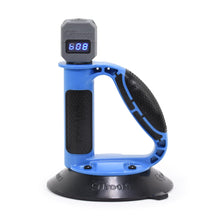
For one-person jobs, the SuperGrip™ Suction Cup with Automatic SuperPump™ combines an ergonomic grip with integrated pump technology and delivers a reliable 88-lb safe working load, so a single technician can set glass confidently. Details are on the SuperGrip™ page.
Large commercial glass is a different category. When panels run into the hundreds of pounds, shops move to powered vacuum lifters. A glass vacuum lifter from Quattrolifts uses suction cups and a vacuum pump to grip large panels, then lift, tilt, rotate, and set them, letting one operator handle glass a full crew would otherwise carry, with far lower injury risk [7]. Multi-cup manual rigs like the CRL Wood's Powr-Grip N5450 reviewed at JourneymanHQ carry up to 500 pounds using a three-cup design that spreads load across the panel [8]. For the vast majority of automotive work, though, the glass is well within the range of a good handheld vacuum cup.
Motorized reciprocating cut-out tools are the fastest. A high-stroke brushless tool like the GT.50 Reaper™ (up to 3,200 SPM) cuts urethane aggressively while keeping control, which is why high-volume shops reach for a power tool over wire when speed is the priority.
Weigh speed against damage risk. Motorized tools give the highest throughput for daily replacements. Wire and cord systems like the FinalCut™ trade some speed for the lowest risk of paint or frame damage, which pays off on high-end vehicles and tight quarter glass. Many shops run both and pick the tool per job.
For heavy commercial panels, a powered vacuum lifter that one operator can steer is the safest choice. For nearly all automotive glass, a handheld vacuum cup is enough: an 8-inch GT Tools cup (flat or curved, 150 to 200 lbs) for standard swaps and the 10-inch curved cup (300 lbs) for heavier curved glass.
A cold knife is a manual blade the technician works through the urethane by hand, giving full manual control for delicate or one-off jobs. A power cut-out tool drives the blade with a motor for speed and less fatigue on high-volume work. Most shops keep a cold knife for detail work and a power tool for the daily grind.
Yes. Wire and fiber cord systems like the FinalCut™ are designed to slice the urethane cleanly and free the glass whole, which is why they are favored when the goal is to reuse the glass or avoid any damage to the surrounding paint and trim.