

YOUR CART IS EMPTY
Go to cart
A suction cup that will not hold is usually not worn out. Three components fail, all of them replaceable, and GT Tools sells the parts for all three in one kit for $5.30. The pump seal wears and the cup stops pulling vacuum. The rubber flapper inside the plunger bore cracks, or its retaining clip breaks, and the cup pumps but will not hold. The cup rubber itself dries out and stops sealing against glass. Replacing a $77.00 cup because of a worn $5.30 seal is a mistake plenty of shops make. This guide covers how to tell the three apart and what to do about each.
GT Tools names the failure points on its rebuild kit page, and knowing which one you have takes about a minute with the pump out.
The pump seal. This is the seal at the bottom of the brass or plastic pump that slides in and out of the cup bore. When it wears, the pump moves but does not draw vacuum properly. The cup feels like it is pumping and never gets tight.
The rubber flapper and its retaining clip. These sit inside the plunger bore and act as the check valve holding vacuum once it is drawn. GT Tools describes the diagnosis: remove the pump, look down at the bottom of the bore, and check whether the C-clip is broken or the rubber flapper is cracked. A cup with a failed flapper pumps down normally and then loses grip within seconds.
The cup rubber. The face that meets the glass hardens and glazes over time. A hardened cup cannot conform to the glass surface, so it never gets a full seal no matter how well the pump works.
Those symptoms are distinguishable. No vacuum at all points at the pump seal. Vacuum that draws and then bleeds off points at the flapper or the clip. Vacuum that never fully forms on clean glass points at the rubber.
Run this before ordering anything.
Doing this on a bench takes less time than arguing with a cup on a vehicle, and it tells you which part to order.
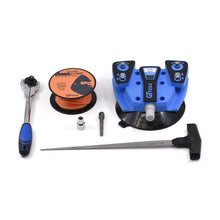
The GT Tools Universal Suction Cup Maintenance and Rebuild Kit is $5.30 and contains a part for each failure mode.
| Component | Fixes |
|---|---|
| Replacement Suction Cup Rubber Flapper | A cracked check valve that lets vacuum bleed off |
| Replacement Flapper Retaining Ring | A broken C-clip holding the flapper in place |
| Replacement Manual Suction Cup Pump Seal | A worn pump seal that will not draw vacuum |
| Suction Cup Reconditioning Gel | Hardened cup rubber that will not seal to glass |
| Suction Cup Pump Seal Lube | Installing the new seal and keeping it working |
Price checked 4 September 2026. Confirm current pricing on the product page.
GT Tools states the components are designed for Large Bore Brass or Large Bore Plastic pump reconditioning, so check which pump your cups use before ordering.
GT Tools publishes the procedure for each.
Pump seal. Remove the pump, replace the bottom seal, apply the seal lube, and reinsert the pump.
Flapper and C-clip. Remove the pump and look down into the bottom of the bore. If the C-clip is broken or the rubber flapper is cracked, replace both with the new parts.
Cup rubber. Place a liberal amount of the reconditioning gel on the outside of the cup and rub it in until the whole cup is coated. GT Tools states this returns the suction cup rubber to a like-new condition and extends the life of the cup.
None of these needs a workshop. All three are bench work with the pump removed, which is why a rebuild kit in the van is worth more than a spare cup in the shop.
Heat is the complaint technicians raise most, and the cause is usually the cup rubber rather than the pump. Rubber that has been through repeated heat cycles hardens and loses the flexibility it needs to conform to curved glass. A cup that held fine in March and slips in July has not developed a mechanical fault; its face has changed. The Auto Glass Safety Council states that a windshield prepped on a stand in the sun heats to over 110 degrees, and recommends covering the glass with a white sheet to keep the temperature down. That shade also helps any cup that has to hold on it.
That is what the reconditioning gel in the rebuild kit addresses. Restoring the rubber restores the seal, and it costs a fraction of a replacement cup.
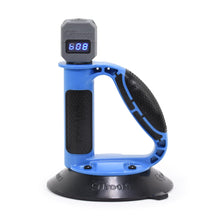
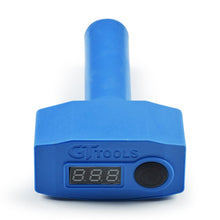
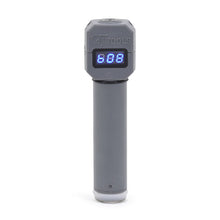
The second answer is automatic vacuum. GT Tools states the SuperPump at $65.00 holds full vacuum once it is reached and reactivates on its own if vacuum dips because of a leak or cracked glass. On a hot day with a marginal seal, a manual cup gives you a gauge to watch and nothing else. An automatic pump responds without being asked. The Mini SuperPump is also $65.00 in a smaller body, and the SuperGrip with Automatic SuperPump is $130.00 with the pump already fitted to the cup.
The published SuperPump figures are full vacuum on a standard 6 inch cup in about six seconds, roughly 2,000 cycles on a five-hour charge, and USB-C charging.
Windshield repair bridges hold on small cups, and those fail for their own reasons. A bridge cup sits on a windshield in direct sun for the length of a repair, which is longer than a handling cup spends on the glass, and the consequence of a bridge slipping is a ruined repair rather than a dropped panel.
GT Tools stocks the 3 Inch Bridge Suction Cup at $11.60 and the SuperStar Bridge Flip Suction Cup at $28.40. Both are cheap enough to replace rather than rebuild once the rubber goes.
For bridge cups, Suction Cup Lube at $8.00 matters more than it does for handling cups. GT Tools recommends a small amount to ensure a good seal on a windshield repair bridge, mirror or UV lamp cup, and states that a pea-sized drop is typically sufficient. It comes in a 2oz squeeze bottle.
Four habits keep cups out of the rebuild cycle.
Lube the seal, not just the glass. The seal lube in the rebuild kit is for the pump seal, and the Suction Cup Lube at $8.00 is for the glass contact. They do different jobs. A pea-sized drop is the stated dose for the latter.
Protect the face in transit. Cup Savers are $16.80 for a 6 inch cover. GT Tools states the 6 inch fits all 5.5 and 6 inch GT Tools cups and the FinalCut Cord and Wire Removal Tool. A cup face that spends the week pressed against tools in a van picks up damage that no amount of pumping fixes.
Inspect before the lift, not after. Checking the cup rubber, the handle, the pump and the release control takes seconds and is the step most likely to be skipped when a job is running late.
Consider what the cup is made of when you replace one. GT Tools states the SuperGrip uses a custom sticky base rubber designed to increase holding power and reduce pump-down time, with a glossy molded finish that further increases stickiness and prevents movement once the cup is pumped down. A cup built around grip rather than rated capacity alone is a different proposition on curved glass in summer.
The economics favour maintenance heavily. A 6 inch curved cup is $77.00, an 8 inch curved is $112.40, and a 10 inch curved is $131.30. Against those, a $5.30 rebuild kit and an $8.00 bottle of lube are a rounding error.
Shops running more than a couple of technicians should keep more than one kit. Each contains a single flapper, clip and seal, so one kit rebuilds one cup. At $5.30 apiece, stocking three or four costs less than a single 8 inch cup at $112.40 and covers a season of failures without a reorder.
Rebuilding is not always right. Replace the cup when the rubber is split or torn rather than merely hardened, when the body or handle is cracked, or when the bore itself is damaged. The rebuild kit addresses seals, the check valve and rubber condition, and it cannot fix structural damage.
If you are replacing rather than rebuilding, the choice of cup is its own decision, and our guide to choosing the right suction cups for windshield work covers profile, diameter and rated capacity across the full range.
Usually the cup rubber rather than the pump. Repeated heat cycling hardens the face so it no longer conforms to curved glass, and a hardened cup cannot form a full seal however well it pumps. The reconditioning gel in the $5.30 rebuild kit is made for this: GT Tools states it returns the rubber to a like-new condition. An automatic pump also helps, since the SuperPump reactivates on its own if vacuum dips.
That pattern points at the check valve inside the plunger bore rather than the pump. Remove the pump and look down into the bottom of the bore to see whether the C-clip is broken or the rubber flapper is cracked. Both parts are in the rebuild kit at $5.30, along with the pump seal and the reconditioning gel.
Rebuild when the fault is a worn seal, a cracked flapper, a broken clip or hardened rubber. Replace when the rubber is split or torn, the body or handle is cracked, or the bore is damaged. A rebuild kit is $5.30 against $77.00 for a 6 inch curved cup and $131.30 for a 10 inch, so the arithmetic favours rebuilding wherever the damage is not structural.
Two different products for two different jobs. The pump seal lube in the rebuild kit goes on the seal at the bottom of the pump during a rebuild. Suction Cup Lube at $8.00 goes on the glass contact surface to improve the seal, and GT Tools states a pea-sized drop is typically sufficient. It is packaged in a 2oz squeeze bottle.
GT Tools describes the kit as universally compatible and states the components are designed for Large Bore Brass or Large Bore Plastic pump reconditioning. Check which pump style your cups use before ordering, since that is the specification the parts are cut to.
A bridge cup holds position on glass for the whole length of a repair, which is longer than a handling cup is under load, and often in direct sun. They are also small and inexpensive, so replacement rather than rebuild is normally the answer. The 3 Inch Bridge Suction Cup is $11.60 and the SuperStar Bridge Flip Suction Cup is $28.40. Using Suction Cup Lube on the contact surface is the cheapest way to improve a bridge seal.
Find maintenance parts, lubricants and the full cup range in the GT Tools Glass Suction Cups collection, or reach the team at gtglass.com to confirm which rebuild parts suit the cups on your bench.