


YOUR CART IS EMPTY
Go to cart
Choosing between manual and powered molding cutting tools comes down to the job in front of you, not the category label. In auto glass work, three tool types show up most often: manual molding cutters that shape trim and molding material, manual cut-out tools that separate the windshield from the pinch-weld, and powered oscillating cutters that drive through urethane with a motor. Molding cutting and full windshield cut-out are related steps in the same removal process, so a shop rarely picks one tool in isolation.
Manual tools suit precision-first cuts, tight access, intermittent jobs, and any situation where direct hand pressure and direction control matter. Powered tools suit repeated heavy-duty cutting and situations where reducing physical effort and raising throughput matter. Base the decision on job volume, urethane condition, access, material, technician skill, power and battery readiness, and how the tool fits the rest of the removal workflow.
Use a manual tool when a single delicate cut, an awkward access angle, or a low daily job count makes tactile control more valuable than speed. Use a powered tool when you cut through urethane repeatedly, handle high volume, or need to lower the physical load on a technician across a full shift.
|
Decision criterion |
Manual molding / cut-out tool |
Powered oscillating tool |
Best fit |
|---|---|---|---|
|
Control |
Direct hand pressure and angle control |
Motor-driven, controlled by speed setting and technique |
Manual for precision cuts; powered for consistent repeated cutting |
|
Speed |
Slower, deliberate pace |
Faster on long or dense cuts |
Powered for high throughput; manual when pace is not the constraint |
|
Technician effort |
Higher physical effort per cut |
Lower sustained effort on dense material |
Powered for full-shift heavy work; manual for occasional cuts |
|
Tight-access handling |
Easy to angle and reposition by hand |
Needs clearance for the tool body |
Manual for corners and quarter glass |
|
Continuous-use capacity |
Limited by technician fatigue |
Suited to extended runs |
Powered for repeated cut-outs |
|
Setup |
Minimal, ready immediately |
Blade fitting, power check |
Manual for quick single jobs |
|
Maintenance |
Fewer components to service |
Motor, blades, gearbox care |
Manual for low upkeep |
|
Consumables |
Blades and cutting elements |
Blades matched to the powered system |
Match to material and cut type either way |
|
Total cost of ownership |
Lower ongoing cost |
Higher, offset by throughput on volume |
Manual for low volume; powered where volume justifies it |
A manual tool earns its place when direct force, angle control, and a slower deliberate pace are advantages. Precision molding cuts, small repair or replacement work, irregular access points, and jobs where repositioning a powered tool would be awkward all favor a manual approach.
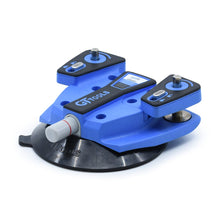
The Universal Molding Cutter is built for fast, accurate cuts on any universal molding material. Place the molding on the cast aluminum tray, align it with the engraved angle markings, and make the cut. It handles straight cuts and perfect 45° miters, which is what corner joints in trim work require, and the engraved guides give repeatable results across a run of pieces. It carries GT Tools' Ironclad Lifetime Warranty.
The GT Tools® Quarter Cutter™ takes the functionality of a long knife and rebuilds it for urethane. At 35 inches, it excels at hard-to-reach corners and is built for quarter glass. The body is durable aluminum with a knurled steel Power Handle, and it can be driven through the urethane with a pushing motion. When that is not enough, you strike the Power Handle with a rubber mallet to slice through crusty old urethane.
That mallet option is the practical difference. On a vehicle that has been through a decade of weather, a technician needs a way to add force without losing the cut line, and a powered tool body often will not fit the corner where you need it. The Quarter Cutter ships with one 3" x 10" Standard Sheath Blade and carries the Ironclad Lifetime Warranty.
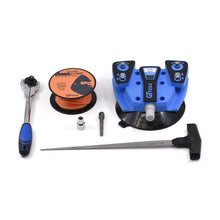
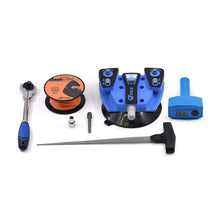
The KONG™ Auto Glass Cut Out Tool is the manual cut-out option, and its design point is position count rather than raw speed. It cuts across the dash and the headliner simultaneously with no repositioning, using dual cutting technology built on Gorilla Cord™. GT Tools states this cuts removal time in half compared to standard wire tools.
Because the cut is cord-driven rather than blade-driven, it is a non-invasive, damage-free process, which is why GT Tools positions it for aluminum frames, no-molding vehicles, imports, and the latest Ford F150. The kit includes the KONG winding assembly, a T-handle, a GT Tools 3/8" swivel ratchet and 1/2" socket, small and large guide shields, 250 feet of Gorilla Cord, a guide leash, and a small case with custom foam. It carries the Ironclad Kit Product Warranty.
A practical sequence for manual cut-out work: assess the molding and vehicle frame, select the access point and matching tool, make controlled cuts, then inspect the surrounding area before moving on to removal and pinch-weld preparation.
A powered tool is justified when daily job volume is high, urethane cutting runs long, cut-outs repeat across many vehicles, and lower manual exertion helps a technician keep a steady workflow through a shift.
A powered tool does not remove the need for controlled technique, correct blade selection, access planning, and inspection of the vehicle and pinch-weld area. The motor drives the cut; the technician still directs it.
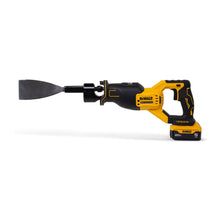
The Fein® SuperCut™ FSC 1.7Q runs a variable operating speed of 11,000 to 18,500 OPM, built for continuous use in heavy-duty auto glass cut-out work. GT Tools describes it as the only oscillating power tool whose performance and overall design are consistently built for heavy-duty sawing and cutting, drawing on more than 40 years of Fein experience developing oscillators for industry and manual trades.
Three things matter in practice. The variable speed control lets a technician slow down for a delicate approach and open up for long urethane runs. The quick-release blade changer cuts the time spent swapping blades between jobs. And the heavy-duty gearbox is what carries sustained load rather than the motor alone. It carries GT Tools' Ironclad 3 Year Warranty, longer coverage than most tools in the range.
Treat power source as a pre-purchase and pre-job check. Confirm whether the equipment is corded or cordless. If cordless, check whether the shop already holds compatible batteries and chargers, and whether available runtime covers the planned workload. A mobile technician working away from a power source depends on this differently than a fixed bay with wall power on hand. Verify these details against the current product listing rather than assuming them.
A molding cutter is one decision inside a system, not a standalone purchase. The full removal process moves from access at the glass edge, through trim and molding handling, urethane separation, glass removal, pinch-weld inspection and preparation, and finally handoff to installation.
Molding and trim handling comes first because it opens the path to the urethane bead. Match the tool to the molding type and the space around it. A manual cutter shapes and separates trim with tactile control and deploys quickly for a single vehicle. Confirm the trim can be removed without damage before committing to that access point.
Choose your approach based on opening geometry, interior and exterior clearance, urethane condition, and whether direct mechanical control or powered oscillation gives safer access. A manual tool prioritizes tactile control and simple deployment. A powered tool supports sustained cutting. A cord system like the KONG handles separation from a single position on frames where blade contact is a risk. The right pick depends on the specific opening, not the category name. Browse the full range in the Cord Wire and Knife Tools and Auto Glass Replacement collections.
After the glass comes out, inspect and prepare the pinch-weld, then hand off to installation. Molding work belongs inside this wider process rather than beside it. The Pinchweld Prep Tools collection covers that next stage.
A job-planning checklist keeps the steps in order:
Assess the vehicle and molding condition.
Select the access point.
Inspect the tool and consumables.
Protect adjacent surfaces.
Choose the cutting method for this opening.
Make controlled separations.
Inspect the pinch-weld.
Clean up and confirm installation readiness.
Use a concrete checklist: blade length, cutting capacity, power source, weight, consumables, warranty, price, access geometry, material and urethane condition, and required maintenance. Verify every numerical specification against the product page before you buy.
Separate durable construction from unsupported longevity claims. The Universal Molding Cutter has a cast aluminum tray. The Quarter Cutter has a durable aluminum body and a knurled steel Power Handle. The Fein SuperCut uses a heavy-duty gearbox. Those are stated construction facts, distinct from any promise about how long a blade or tool will last.
Warranty is worth comparing directly, because coverage varies across the range. The Universal Molding Cutter and Quarter Cutter carry the Ironclad Lifetime Warranty, the KONG carries the Ironclad Kit Product Warranty, and the Fein SuperCut carries an Ironclad 3 Year Warranty. GT Tools' standard terms extend coverage to hand and power tools against defects in workmanship and materials, with disposable and consumable items excluded.
Match the criteria to your own shop:
Labor availability: how many technician-hours you can spend per cut.
Workload: how many removals you run in a typical week.
Vehicle mix: the range of frames and molding types you service.
Manual control: how much tactile feel a given job demands.
For lower-volume work, precision molding cuts, difficult corners, and quarter-glass access, start with a manual setup: the Universal Molding Cutter for trim work and the Quarter Cutter for urethane in tight spaces.
For removal on aluminum frames, no-molding vehicles, and anything where blade contact is a risk, the KONG handles the cut from a single position.
For recurring heavy-duty cut-outs or higher-volume workloads where throughput and reduced sustained effort matter, add the Fein SuperCut.
For shops handling varied vehicles, run a mixed toolkit. The specific job, not the tool category, decides which tool the technician reaches for.
Yes, and most do. Keeping both means a technician can pick the tool that fits each vehicle and each cut rather than forcing one tool onto every job, so precision work and repeated heavy-duty cut-outs are each covered by the right tool.
The Quarter Cutter is a 35-inch manual long knife you drive through urethane by hand, with the option of a rubber mallet on the Power Handle for hardened urethane. The Fein SuperCut is a motorized oscillating tool running 11,000 to 18,500 OPM. The Quarter Cutter reaches corners a powered tool body cannot; the SuperCut sustains long cuts without technician fatigue.
No, they cover different needs. The KONG's cord system cuts across dash and headliner simultaneously from one position without blade contact, which suits aluminum frames and no-molding vehicles. Molding cutters and long knives give direct mechanical control at a specific point. The vehicle and the separation method decide.
For the Quarter Cutter, it ships with a 3" x 10" Standard Sheath Blade and takes standard sheath blades. For the Fein SuperCut, use blades matched to that system; the quick-release changer makes swaps fast, so confirm compatible blades on the product page. Check the current listing before ordering.
Coverage differs by tool. The Universal Molding Cutter and Quarter Cutter carry the Ironclad Lifetime Warranty, the KONG carries the Ironclad Kit Product Warranty, and the Fein SuperCut carries an Ironclad 3 Year Warranty. Consumable and disposable items are excluded across the line.
Manual tools earn their place through controlled access and precision work. Powered equipment earns its place through recurring heavy-duty demand and steadier workflow across high volume. Neither category wins outright, because the job decides.
Shops that perform both precision molding tasks and repeated windshield removals get the most from a mixed toolkit: manual cutters for control and access, powered cutting for sustained work.