

YOUR CART IS EMPTY
Go to cart
Choosing a windshield repair kit sets how fast you work, how clean the finished repair looks, and how much of the job you keep. This guide covers what separates a professional system from a consumer one, what belongs in a complete kit, what GT Tools® charges for each of its three systems, and how to pick between them based on your volume, your repair mix, and whether you work mobile or from a fixed bay.
A consumer kit from a parts-store shelf is built for one repair on one car. It carries a simple applicator, a single resin, and a cure that waits on daylight.
A professional kit is built around an injector that cycles between vacuum and pressure, so the technician can pull air out of a break before driving resin into every leg of a star. It also carries more than one resin, because a tight star and an open bull's-eye call for different viscosities, and a matched UV source so the cure does not depend on the weather.
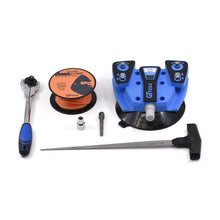
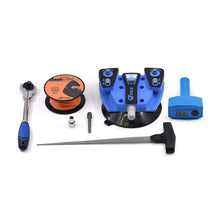
The difference is visible in what ships in the box. The VANISH™ Professional Windshield Repair Kit at $882.00 includes the VANISH bridge and injector assemblies, a cordless drill and charger, a carbide probe, a slide hammer, a 2 inch magnifying mirror, a seal box with injector and plunger seals, pit tape, pit gloss, pit squares, two Crack Jacks, and five 15cc resins: low viscosity, medium viscosity, high viscosity, long crack repair, and high viscosity pit filler. GT states the system is patented, patent-pending and made in the USA.
A complete professional kit is a set of components that each do one job well.
| Component | What it does | Why quality matters |
|---|---|---|
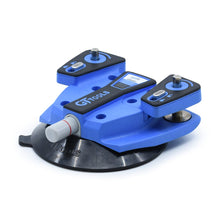
| Bridge and injector assembly | Mounts to the glass, creates vacuum to pull air from the break, then pressurizes to push resin in | The heart of the kit; it controls whether resin fully fills the damage |
| Windshield repair resins | Fill and seal the break to restore strength and clarity | Wrong viscosity or weak bond leaves visible scars or fails structurally |
| UV curing lamp | Hardens the resin once the break is filled | Must match the resin's waveband or the cure is incomplete |
| Carbide drill or probe | Opens the impact pit so resin can flow into tight legs | Poor drilling either damages the glass or blocks resin flow |
| Cleaning tools and inspection mirror | Prep the break and verify the fill from behind the glass | Debris or moisture in the break ruins the repair |
| Pit polish and curing film | Finish the surface and cure the pit flush | Determines the final look and how smooth the repair feels |
Bridge and injector assembly. The bridge holds the injector steady over the break and the injector cycles between vacuum and pressure. GT sells the assemblies separately as well as inside kits, so a shop can rebuild or add a second station without buying a whole system. The Wizard™ Smart Injector and Bridge Assembly is $882.00. The full range is on the bridges and injectors collection.
Resins. A professional kit carries several so you can match the fill to the damage. Our guide to choosing windshield repair resin by damage type maps each viscosity to bullseye, star, combination, long crack and pit.
UV curing lamp. The lamp hardens the resin in seconds rather than waiting on ambient sun, and the cure light has to match the resin's spectrum. The VANISH page states its integrated DarkCure™ system cures in under 15 seconds.
Carbide drill or probe. Used to open the impact point so resin can reach every leg. The VANISH kit ships a cordless drill, medium drill bits and a carbide probe.
Cleaning tools and inspection mirror. Clear dirt, glass fragments and moisture before injecting. The mirror lets you check the fill from behind the glass.
Pit polish and curing film. After the resin cures, a drop of pit resin, a curing film and a scrape leave the surface flush, then polish for clarity.
GT's buyable repair lineup is three systems.
| System | Price | Built for |
|---|---|---|
| Wizard™ Smart Windshield Repair System | $3,255.00 | Automated cycling, highest throughput |
| VANISH™ Professional Windshield Repair Kit | $882.00 | Mobile work, integrated sub-15-second curing |
| SuperStar™ SpeedLock™ Windshield Repair Kit | $772.00 | Hand-operated control at the lowest entry price |
Prices checked 23 September 2026. Confirm current pricing on the product pages.
The Wizard is also sold as a machine only at $2,100.00 for a shop that already holds bridges and consumables.
One detail matters more than the price gaps. The same seal SKU, X-Injector Seals at $16.80 for five, fits the Wizard, VANISH and SuperStar. A shop running two of the three stocks one seal rather than two, and a technician who learns one injector is not starting over on the next.
Our guide to which repair system fits which shop takes all three apart against shop profile and volume.
Driving to the car means a kit that sets up fast, packs small and runs without shop power. The VANISH kit at $882.00 fits that profile. Its curing system is integrated rather than a separate lamp to carry, it charges over USB-C from an 8.4V wall charger, and it arrives in a small tech case with cut foam. The five resins in the box cover the full damage range, so a first job does not need a second order.
The SuperStar SpeedLock kit at $772.00 is the lower entry point and is hand-operated throughout.
A fixed shop running repairs back to back optimizes for throughput, which is where the Wizard at $3,255.00 sits. It is the successor to the Eliminator, the first fully computerized windshield repair system, which GT patented. A high-volume bay can also stage work by adding a second bridge and injector assembly at $882.00 rather than a second complete system.
Technicians researching GT Tools, Equalizer and Delta Kits are usually weighing injector design, kit range and support. All three are established names in auto glass tooling and all three appear in most professional buying conversations.
What we can do here is publish GT's side in full, with figures a buyer can check against the product pages on this site. Equalizer and Delta Kits publish their own specifications and pricing, and the fair comparison is the one you make from primary sources on all three.
GT Tools® in numbers. Three systems at $3,255.00, $882.00 and $772.00. Six DiamondClear™ resin viscosities at $39.00 for 15cc and $69.00 for 30cc. One seal SKU at $16.80 that fits all three injectors. Bridge and injector assemblies sold separately from $882.00, so a system is repairable and expandable rather than replaceable. Manufacturing auto glass tools since 1984, and the patent holder on the Eliminator, the first fully computerized windshield repair system, of which the Wizard is the current successor. Tools made in the USA.
Where GT's design differs. The VANISH and SuperStar injectors are hand-operated, so an experienced technician flexes the injector, pulses the resin and reads the fill directly. The Wizard automates that cycle. GT sells both approaches rather than one, which is the actual choice a buyer is making.
Resin choice decides whether a repair holds and whether it disappears. Professional-grade resin restores the structural integrity of the laminated glass and matches the optical clarity of the surrounding surface.
Viscosity is the variable. Tight star cracks need a thin, low-viscosity resin that wicks into narrow legs. Open bull's-eyes and larger pits need a thicker resin that fills volume. Combination breaks often need both, which is why the VANISH kit ships five.
GT Tools® DiamondClear™ resins are made in the U.S. and priced at $39.00 for 15cc and $69.00 for 30cc across all six viscosities. Tinted versions in Blue Green, Amber and Gray exist in 15cc only. Browse them on the windshield repair resins collection, or read which resin suits which damage.
GT Tools® sells three: the SuperStar™ SpeedLock™ kit at $772.00, the VANISH™ Professional kit at $882.00, and the Wizard™ Smart system at $3,255.00. The Wizard is also available as a machine only at $2,100.00. Consumables are the ongoing cost: DiamondClear™ resins are $39.00 for 15cc and $69.00 for 30cc, and injector seals are $16.80 for five.
GT's guidance is that damage is repairable when a chip is smaller than a quarter or a crack is less than 3 inches long, and not in the line of sight. Replace instead when cracks reach the edges of the glass, sit in the driver's direct view, or spider out in multiple directions. Our full guide to fixing a cracked windshield covers the assessment.
Yes. The X-Injector Seals at $16.80 for five fit the Wizard, VANISH and SuperStar injectors, and DiamondClear™ resins are used across all three. A shop running more than one GT system carries one set of consumables rather than one per machine.
The VANISH and SuperStar injectors are hand-operated, so the technician controls the vacuum and pressure cycle directly and reads the fill as it happens. The Wizard runs that cycle automatically. Our comparison of which system fits which shop works through the trade-off by volume and by who is holding the tool.
No. Windshield repair kits are built for chips and cracks in laminated auto glass. Surface scratches are a separate job with separate tooling; see the glass scratch repair kits collection, or our guide to choosing discs, grit order and polishing compound.
The right kit follows your volume, your typical repair types, and whether you value portability or throughput. A mobile technician wants the VANISH kit at $882.00 for its integrated curing and small case. A shop at the lowest entry price wants the SuperStar SpeedLock at $772.00. A high-volume bay wants the Wizard at $3,255.00 and the option to add a second bridge and injector assembly rather than a second system. All three share one seal SKU and one resin line, so the decision is not locked in forever. Browse the full windshield repair lineup, or reach the team at gtglass.com for a recommendation matched to your shop.