

YOUR CART IS EMPTY
Go to cart
Scratch removal fails for one reason more than any other: somebody skipped a step in the abrasive sequence. GT Tools Tools sells two five-step disc ladders for glass, its own SpeedGrit and 3M Trizact, and both are built the same way. Every step after the first exists to remove the scratches the step before it made. SpeedGrit says so disc by disc: Step 3 Green is "used to blend out discs 1 and 2," and Step 4 Yellow blends out 1, 2 and 3. The Trizact pages give the same instruction for the whole range, that you work down through every grade below the one you started at before any compound touches the glass. Skip a grade and those scratches stay in the glass, under the polish.
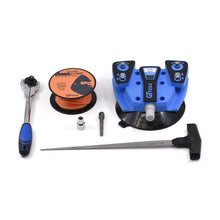
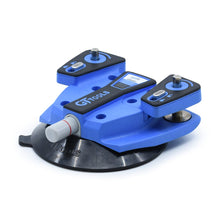
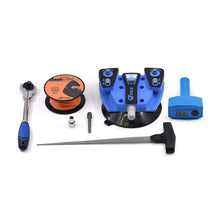
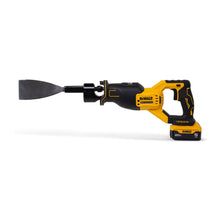
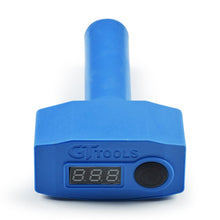
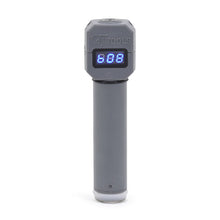
The discs are one of three things a scratch job needs. The machine that spins them is the Scratch Hog at $1,418.00 or the Glass Saver at $630.00, and a cerium oxide compound finishes the glass after the last disc comes off. This guide covers all three: which discs, in what order, what they cost, which pads they mount on, and which compound to buy.
The Scratch Hog Standard removes scratches up to .015 of an inch deep, down to the lightest surface damage, and GT Tools describes it as tested distortion free. That figure is the ceiling on what abrasive resurfacing will take out at all.
The Glass Saver is built, in GT Tools's words, for "the majority of scratches that can be seen, but not felt." That phrase is also the test you can run without measuring anything. If a fingernail catches in the scratch, you are in abrasive territory. If it does not, compound alone may finish the job.
GT Tools also publishes a depth for each SpeedGrit step, which is the closest thing in the catalog to a map of where to start.
Match the damage to the shallowest of those that will clear it. Damage past .015 of an inch is past what the Scratch Hog Standard is rated to remove, and any damage crossing the driver's primary line of sight is a replacement rather than a repair.
Our guide to professional glass scratch removal and polishing systems covers the repair-versus-replace decision and the full machine range. This guide picks up after that, at the point where you are choosing discs.
SpeedGrit came in with the 2023 Scratch Hog redesign and is sold step by step.
| Step | Color | Grade | Rated to | 3 inch | 5 inch |
|---|---|---|---|---|---|
| 1 | Black | Coarse | .015 deep | $7.40 | $9.50 |
| 2 | Red | Medium Coarse | .010 deep | $2.40 | $4.40 |
| 3 | Green | Medium | .005 deep, blends 1 and 2 | $2.40 | $4.40 |
| 4 | Yellow | Fine | .003 deep, blends 1 to 3 | $2.40 | $4.40 |
| 5 | Red | Extra Fine | Pre-polish after 1 to 4 | $2.40 | $4.40 |
Prices checked 12 September 2026. Confirm current pricing on the product pages.
Two things to note before ordering. The Step 1 Black disc is roughly three times the price of the four below it, $7.40 against $2.40 in the 3 inch. And Step 2 and Step 5 are both called Red. One is Medium Coarse and the other is Extra Fine. Order by step number.
The Trizact range runs on color rather than step numbers. The published order from most aggressive to polish is Green, Pink, Blue, Orange, White. The Blue disc, third in that order, is for light to moderate scratching at 0.005 deep, which puts it alongside SpeedGrit Step 3.
| Grade | 3 inch single | 3 inch 25 | 3 inch 100 | 5 inch single |
|---|---|---|---|---|
| Coarse | $2.40 | $56.00 | $212.10 | $6.00 |
| Medium Coarse | $2.40 | $56.00 | $212.10 | $6.00 |
| Medium (Blue) | $2.40 | $56.00 | $212.10 | $6.00 |
| Fine | $2.40 | $56.00 | $212.10 | $6.00 |
| Polishing | $4.20 | $82.50 | $293.54 | $7.30 |
Prices checked 12 September 2026. The 5 inch discs are also sold in 25 and 100 packs.
At single-disc prices the two lines match on the fine grades and separate at the top: SpeedGrit Coarse is $7.40 in the 3 inch against $2.40 for Trizact Coarse.
The larger difference is how you buy. Trizact comes in 25 and 100 packs, which brings the 3 inch disc down to $2.12 a piece in the pack of 100, while SpeedGrit is sold singly. Against that, the Scratch Hog Standard ships with five of each SpeedGrit step in both sizes, so a Scratch Hog owner already knows that ladder and owns the pads for it.
Start at the least aggressive step that will remove the damage, not the most aggressive one that definitely will. The steps above your entry point are steps the damage never called for, and running them means grinding away good glass. The steps below it are not optional, because each one clears the marks the step above it left.
So if the scratch clears at Step 3 Green, the job is Step 3, then Step 4 Yellow, then Step 5 Red, then compound. Three discs, and nothing has been skipped. On Trizact the same scratch entering at Blue goes to Orange, then White. GT Tools puts it on the Trizact pages as an instruction rather than a suggestion: users must progress down through the aggressions uniformly from whatever aggression they started at.
Leave a grade out below your entry point and the scratches it should have cleared are still there under the polish.
The catalog also holds Hook and Loop Sanding Discs at $3.00, graded in microns from 60 coarse down to 9 fine. These are not part of either glass ladder. Their page puts them on plastics and headlights, for surfaces that are scratched, pitted, crazed or rough to the touch.
Discs need a backing pad to run on, and the backing pad is where a first order most often comes up short.
| Backing pad | Sizes and prices |
|---|---|
| Hook and loop | 3 inch $28.40, 5 inch $34.70 |
| PSA | 3 inch $28.40, 5 inch $34.70 |
| 8mm spindle | 2 inch $22.10, 3 inch $24.10 |
Prices checked 12 September 2026.
Hook and loop and PSA cost the same and are not interchangeable. Hook and loop takes velcro-backed discs and changes grade in seconds, which matters on a five-step job; PSA takes adhesive-backed discs. Check which backing your discs have before ordering. The 8mm spindle pads fit tools that take a spindle rather than a threaded backing plate.
The abrasive ladder takes the damage out. Cerium oxide brings the clarity back. GT Tools sells it two ways, ready-mixed as a liquid or as a powder you mix with water.
| Product | 8 oz | 32 oz | Use |
|---|---|---|---|
| Cerium Oxide Glass Polish | $25.20 | $79.80 | General polishing |
| With Mineral Remover | $25.20 | $93.50 | Where mineral deposits are part of the damage |
Prices checked 12 September 2026.
The two match at 8 oz and separate at 32 oz, $79.80 against $93.50. The Mineral Remover version is the one specified for removing mineral deposits from glass, which makes it the bottle for a windshield that has been sitting under a sprinkler. Our guide to removing hard water spots covers that problem on its own.
One naming point that sometimes catches people. The storefront lists "Cerium Oxide Glass Polish." The Scratch Hog packing list and the Mineral Remover page both call the same product "Liquid Diamond Polish." Same bottle, two names.
Powder costs less per container and needs mixing with water into a paste or a slurry. GT Tools sells four, and three of the four publish an average particle size.
| Powder | Price | Particle size | What the page says |
|---|---|---|---|
| Cerium Oxide Polishing Powder DF4001, 1lb | $35.00 | 3.1 micron | Paste or slurry, natural or synthetic felt and foam pads |
| Cerium Oxide Polishing Powder DF8661, 1lb | $38.00 | 1.1 micron | Paste, felt and foam pads |
| Diamond Fast Cerium Oxide Glass Polish, 1lb | $58.80 | 1 micron | The base material for GT Tools's other polishing products, sold raw so you mix to your own consistency |
| Diamond Fast Cerium Oxide Glass Polishing Compound | $63.00 | Not published | Optical-grade, mixed with water into a slurry, for felt pads and machines |
Prices and particle sizes checked 12 September 2026.
Particle size is the only specification that separates them, and GT Tools does not rank the four. The 3.1 micron powder at $35.00 is the coarsest of the three that publish a figure; the 1.1 and 1 micron powders sit together at the fine end.
The Glass Polishing Kit at $51.50 holds half a pound of Diamond Fast powder, a 5 inch felt pad, a 5 inch backing pad and a spindle adapter. GT Tools specifies a drill at around 1500 RPM and puts the kit on scratches that do not catch a fingernail. For a shop that already has the machine, the components separately make more sense.
Compound goes on with a polishing pad, which is a different item from the backing pad that holds the discs.
| Pad | Sizes and prices | What it is for |
|---|---|---|
| Reusable Glass Polishing Pads | 3 inch $21.00, 5 inch $22.10 | Dense felt, a rigid platform for faster polishing; GT Tools names hard water staining and corrosion |
| High Density Polishing Felt Pad | 2 inch $21.00, 3 inch $22.10 | Perforated to hold the compound on the pad longer, for longer pad life |
| Liquid Diamond Foam Polishing Pad | 5 inch $18.90 | High-density foam for the final polish, at 1000 to 2000 RPM on a rotary polisher |
Prices checked 12 September 2026.
The two felt pads cut faster and the foam pad puts the luster on at the end. Both powder pages name felt and foam as the materials the compound is meant to run on.
Anti-Stain Glass Solution mixes at 0.25 oz to 32 oz of water and goes on the glass while you polish. GT Tools describes it as forming a more fluid surface that prevents overheating and stops polish adhering to the glass. It ships inside the Scratch Hog Standard kit and is not currently in stock on its own.
A shop running SpeedGrit in 3 inch stocks five grades: $7.40 for Step 1 and $2.40 for Steps 2 through 5, so $17.00 for one of each. The same five steps in Trizact 3 inch are $13.80. Buy the four Trizact abrasive grades in 25 packs and the bill is $224.00 for 100 discs, plus $82.50 for 25 polishing discs. Discs are consumable, so those figures repeat.
Add a backing pad at $28.40, a polishing pad from $18.90, and a compound. Four 8 oz bottles of liquid at $25.20 would be $100.80 for the same 32 ounces the large bottle holds at $79.80, a saving of $21.00 for a shop using that much. A pound of powder is $35.00 to $63.00 and you supply the water.
Against all of that, the Scratch Hog Standard at $1,418.00 includes the machine, both backing pad types in both sizes, five of each SpeedGrit step in both sizes, polishing discs, foam and felt pads, both liquids, the powder, the additives, a water tank, ear protection and a particulate mask. The Glass Saver at $630.00 arrives with Diamond Fast compound and pads.
The least aggressive step that will remove the damage. GT Tools publishes a depth rating for each SpeedGrit step: Step 1 Black to .015 of an inch, Step 2 Red to .010, Step 3 Green to .005, Step 4 Yellow to .003. On a scratch you can see but cannot feel, you often begin at the fine end or need no abrasive at all. Starting too coarse means more glass to grind flat and more steps to run afterwards.
No, and skipping is the most common cause of a poor finish. The Trizact pages give the instruction directly: progress down through the aggressions uniformly from whatever aggression you started at, so damage removed at Blue then goes to Orange and then to White. SpeedGrit says the same thing a different way, describing Step 3 as the disc that blends out discs 1 and 2. Skip a grade and its scratches are still in the glass when you polish.
Two five-step ladders for the same job. SpeedGrit is GT Tools's own, introduced with the 2023 Scratch Hog redesign, sold singly by step number with a published depth rating on each step. Trizact runs on color, Green through Pink, Blue, Orange and White, and comes in 25 and 100 packs as well as singly, which brings the 3 inch disc to $2.12 at volume.
The Scratch Hog Standard is rated to remove scratches up to .015 of an inch deep, and GT Tools describes it as tested distortion free. Damage deeper than that, or damage crossing the driver's primary line of sight, is a replacement rather than a repair.
Liquid is ready to use: Cerium Oxide Glass Polish at $25.20 for 8 oz and $79.80 for 32 oz, or the version with Mineral Remover at $25.20 and $93.50 where mineral deposits are part of the damage. Powder costs less per container and needs mixing with water. GT Tools sells four powders from $35.00 to $63.00 a pound, three of which publish an average particle size: 3.1, 1.1 and 1 micron.
A backing pad holds the abrasive discs on the machine, in hook and loop or PSA at $28.40 in 3 inch and $34.70 in 5 inch, plus an 8mm spindle version at $22.10 and $24.10. Hook and loop takes velcro-backed discs; PSA takes adhesive-backed ones, so check which your discs have. A polishing pad carries the cerium oxide compound at the end: felt at $21.00 to $22.10, or a 5 inch foam pad at $18.90. A first order with discs and compound but no polishing pad is a job you cannot finish.
No. The Hook and Loop Sanding Discs at $3.00, graded 60 to 9 micron, are for plastics and headlights. Glass uses SpeedGrit or Trizact. They sit in the same part of the catalog and are not interchangeable.
Browse the full range of discs, pads and compounds in the Glass Scratch Removal collection, or reach the team at GT Toolsglass.com to work out which ladder suits the work you take.