

YOUR CART IS EMPTY
Go to cart
With the right gun the bead goes on in one pass. Auto glass urethane is thick, it stiffens as it gets colder, and the tool has to push it out at a steady rate while your hand moves at a steady speed. This guide covers what GT Tools sells, what each one costs, and the two questions to answer before you buy: how cold it gets where you work, and what size pack your urethane comes in.
A manual caulking gun multiplies the force of your hand, and the ratio says by how much. An 18:1 gun turns one pound of grip strength into 18 pounds against the urethane. A 26:1 turns it into 26 pounds. For the same grip, the 26:1 puts about 44 percent more force on the urethane.
GT Tools sells two manual guns for auto glass work, and the important difference between them isn’t price or force, it’s about climate.
| Gun | Price | Takes | Built for |
|---|---|---|---|
| Mechanical Advantage 18 to 1 | $48.30 | 10 oz cartridges | High-viscosity urethane year round in moderate temperatures |
| Mechanical Advantage 26 to 1 | $71.40 | 10 oz cartridges | High-viscosity urethane in cold weather |
Prices checked 24 September 2026.
GT Tools' page for the 18:1 suggests it for the warm Southern states, describing them as not putting as much demand on a gun even with high-viscosity urethane. The 26:1 page is explicit that it handles high-viscosity urethane even in cold weather, and notes a patented mechanism that compensates for wear on the push rod.
The price difference between them is $23.10. If you work anywhere with a real winter, buy the 26:1. A gun that is comfortable in July is great, but not if you have to put it down in January.
The push rod point is worth its own line. GT Tools identifies the push rod as the part its 26:1 mechanism compensates for, which tells you where a manual gun wears out. On a tool at this price, that is what keeps it working for years.
Powered guns are roughly ten times the cost of the manual ones, so the case has to be volume.
| Gun | Price | Availability |
|---|---|---|
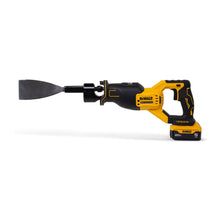
| DeWalt Caulking Gun, 20V Lithium Ion | $549.20 | In stock |
| Milwaukee Cordless Caulking Gun, 18V | $519.80 | Backordered, orders accepted |
| Milwaukee M18 Cordless Caulking Gun Kit, 10 oz | $330.00 | One unit remaining |
Prices and stock checked 24 September 2026.
A powered gun delivers at a constant rate. A trigger held in one position pushes urethane at one speed, so bead height does not drift as your hand tires on the eighth windshield of the day. A shop setting two or three a week will not notice, but one that sets several a day will
The second argument is the battery platform. If your bay already runs DeWalt 20V or Milwaukee M18 packs, the gun shares them and the price above buys a tool rather than a new battery system. If it does not, add the cost of batteries and a charger to the figures in that table before comparing.
A powered gun does not mean you have to retire the manual one. A manual gun needs no charge and costs little enough to keep in the van as a second tool.
Auto glass urethane ships two ways:
Which one you use usually follows what your urethane supplier ships.
| Conversion | Price | Fits |
|---|---|---|
| Milwaukee 10oz Sausage Conversion | $93.50 | Milwaukee |
| Milwaukee 20oz Sausage Conversion | $140.70 | Milwaukee |
| DeWalt 20oz Sausage Conversion | $154.40 | DeWalt 20 volt |
| DeWalt 10oz Sausage Conversion | $161.70 | DeWalt 20 volt |
Prices checked 24 September 2026.
Two things to check before ordering. Conversions are tied to a specific tool and voltage, so match the product title to your gun rather than to the brand. And the sizes do not price consistently across the two brands: on Milwaukee the 10oz conversion at $93.50 is the cheaper of the pair, while on DeWalt the 10oz at $161.70 is the more expensive.
The pack size question only arises on the powered side, because GT Tools' two manual guns take 10 oz cartridges and nothing else.
A 20 oz pack holds twice the urethane, so a technician setting several windshields in a row changes packs half as often. Each changeover costs a nozzle cut, a fresh notch and a few seconds of bead that goes in the bin. On a high-volume bay that adds up. Against that, a 20 oz barrel is longer and heavier in the hand, and a part-used pack left overnight is twice the waste if it skins over.
The practical rule is that 10 oz suits mobile work and low volume, and 20 oz suits a bay setting glass back to back. If you buy the wrong one, the conversion barrel is the fix rather than a new gun.
The gun controls the rate. The nozzle controls the shape. A V-notch cut by eye with a razor blade comes out differently every time, and the bead profile changes with it.
The Urethane Knotch Cutter at $54.60 cuts the same notch every time. In a shop with more than one technician, that means a bead spec can be written down and handed over rather than only demonstrated.
Auto Glass Chisel Sticks at $4.20 are for working the bead and cleaning up at the pinchweld.
A manual setup for cold-weather work means the 26:1 gun at $71.40, and that is the whole tool cost. It takes the 10 oz cartridges most urethane ships in, so there is nothing else to buy.
A manual setup for a warm region costs $48.30.
A powered setup on a battery platform you already own costs $519.80 or $549.20, plus a conversion at $93.50 to $161.70 if your urethane comes in sausages. That is $613.30 to $710.90 before batteries.
Add the Knotch Cutter at $54.60 to either, once, and chisel sticks at $4.20 as a consumable.
For a shop buying its first gun, the 26:1 at $71.40 covers every temperature GT Tools describes and takes the cartridges most urethane ships in. Buy it unless you know your work never gets cold, in which case the 18:1 at $48.30 saves $23.10.
Move to a powered gun when the volume is there or when your hands tell you to, and buy the one matching the battery platform already in the bay. Keep the manual gun after you do.
Urethane application is the step between removal and setting, and the work on either side of it changes how much the bead has to do. Our guide to pinchweld prep and urethane removal covers what comes before, and single-technician windshield installation covers setting the glass into the bead you have just laid.
GT Tools sells 18:1 at $48.30 and 26:1 at $71.40, and separates them by climate rather than by job size. The 18:1 page places it in warm regions and states it handles high-viscosity urethane year round in moderate temperatures. The 26:1 page states it handles high-viscosity urethane even in cold weather. If your winters are real, buy the 26:1; $23.10 is less than the cost of finding out.
It depends on volume. A powered gun is $519.80 or $549.20 against $71.40 for the top manual gun. The powered gun delivers at a constant rate, so bead height does not change as your hand tires. At a few windshields a week the manual gun is enough. At several a day the consistency is the case for it, and the second case is a battery platform your bay already runs.
Buy the conversion barrel made for your specific tool and voltage. GT Tools sells four: Milwaukee 10oz at $93.50, Milwaukee 20oz at $140.70, DeWalt 20 volt 20oz at $154.40 and DeWalt 20 volt 10oz at $161.70. Match the product title to your tool rather than matching the brand alone, since the conversions are not interchangeable across voltages.
Three things to check. The ratio against the temperature, since cold urethane is stiffer and asks more of the gun. The nozzle cut, which sets the profile regardless of the gun. And wear in the push rod, which is the part that wears on a manual gun; GT Tools notes that the 26:1 has a patented mechanism to compensate for it.
Both the 18:1 and the 26:1 take 10 oz cartridges. For 20 oz sausage packs you need a powered gun with the matching conversion barrel.
Whichever gives you a clear view of the bead as it lands. Constant hand speed and a consistent nozzle cut change the result far more than direction does.
You need more mechanical advantage, which is what the 26:1 provides. Urethane stiffens as it cools, so the same cartridge that flows easily in a warm bay resists in an unheated one. A shop working outdoors through winter is the clearest case for the 26:1 or for a powered gun.
Browse the full range in the Caulking Guns collection, or reach the team at gtglass.com.